Living in San Ramon, CA: A Guide for East Bay Home Buyers San Ramon, CA,…
Average Closing Costs in California: What Home Buyers Should Expect in 2026
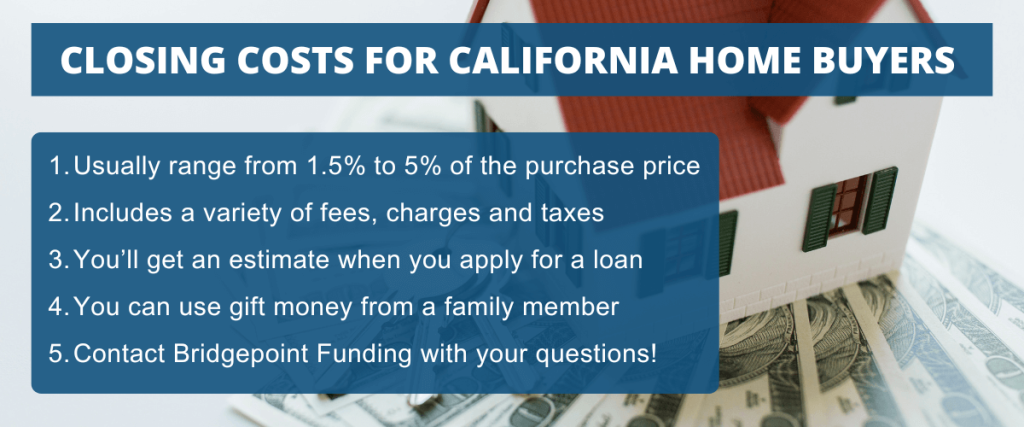
When you’re buying a home in California, average closing costs in California typically range from 1.5% to 5% of your purchase price. With the state’s median home price forecast to reach $905,000 in 2026, that means many buyers will pay between $13,575 and $45,250 in closing costs.
These numbers feel substantial because California home prices remain among the highest in the nation. But here’s what matters most: closing costs are predictable, often negotiable, and manageable when you understand what you’re paying for.
Whether you’re considering mortgage loan options in California or just starting to explore the costs involved, this guide will help you budget with confidence.
What Are Closing Costs in California?
Closing costs are the fees and expenses you pay when you finalize your home purchase. These are separate from your down payment.
Your down payment goes directly toward the home’s purchase price and builds equity. Closing costs cover the services, paperwork, and administrative work required to complete the sale and set up your mortgage.
Think of it this way: your down payment is what you pay to own the home, while closing costs are what you pay to make the transaction happen.
These costs typically include three categories of fees:
Lender Fees: Charges for processing and originating your mortgage loan.
Third-Party Fees: Payments to outside service providers like appraisers, title companies, and escrow agents.
Government Fees: Local taxes and recording fees charged by counties and municipalities.
You’ll also prepay certain expenses at closing, like property taxes, homeowners’ insurance, and mortgage interest for the first month.
How Much Are Closing Costs in California for Buyers?
Closing costs in California for buyers usually fall between 1.5% and 5% of the home’s purchase price. But that’s a wide range, and your actual costs depend on several factors.
Loan type makes a difference. FHA loans include an upfront mortgage insurance premium. VA loans require a funding fee. Conventional loans may have different fee structures entirely. Each loan program has its own requirements that affect your total costs.
Purchase price matters. The more expensive the home, the higher certain fees become. Buyers in coastal markets like the Bay Area, Los Angeles, and San Diego typically pay more in closing costs than buyers in the Central Valley or Inland Empire.
Location influences costs. California counties charge different amounts for transfer taxes and recording fees. What you pay in Alameda County will differ from what you pay in San Diego County.
Discount points are optional. Some buyers choose to pay mortgage discount points at closing to secure a lower interest rate. Each point costs 1% of your loan amount and can significantly increase your upfront costs. You can also buy partial points.
Escrow services vary by provider. Different title and escrow companies charge different fees based on the complexity of your transaction and the services they provide.
Timing affects prepaid costs. If you close near the beginning of the month, you’ll pay more in prepaid interest than if you close near the end.
This is why we present ranges instead of exact figures. Your closing costs are unique to your situation.
Average Closing Costs in CA by Home Price
Let’s look at what closing costs might look like at different price points. For 2026, the projected median home price in California is around $905,000. At that price, buyers can expect closing costs between $13,575 and $45,250.
Here’s a breakdown at various price levels:
| Home Price | Average Closing Costs in California for the Buyer (1.5% – 5%) |
|---|---|
| $500,000 | $7,500 – $25,000 |
| $600,000 | $9,000 – $30,000 |
| $700,000 | $10,500 – $35,000 |
| $800,000 | $12,000 – $40,000 |
| $900,000 | $13,500 – $45,000 |
| $1,000,000 | $15,000 – $50,000 |
| $1,500,000 | $22,500 – $75,000 |
| $2,000,000 | $30,000 – $100,000 |
These figures give you a ballpark estimate. For larger loan amounts, particularly jumbo loans in California, closing costs can reach the higher end of this spectrum.
The good news? You won’t need to guess. You’ll receive detailed cost estimates during the mortgage process.
What Fees Are Included in California Closing Costs?
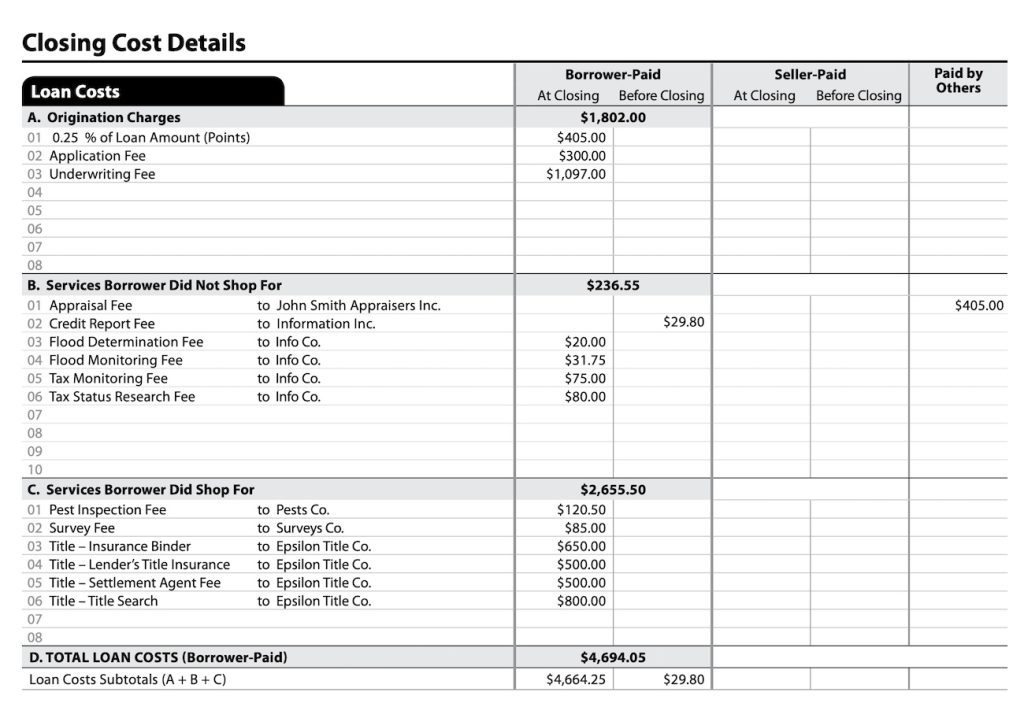
California home buyer closing costs include a long list of individual charges. Here are the most common ones:
Lender Fees:
- Loan origination fee for processing your application
- Underwriting fee for evaluating your loan
- Credit report fee
- Discount points (optional, used to lower your interest rate)
Third-Party Fees:
- Appraisal fee to determine the home’s market value
- Title search and title insurance to verify ownership
- Escrow fee for managing the closing process
- Home inspection (typically paid separately before closing)
- Property survey to establish legal boundaries
- Notary fees
- Courier fees for document transfers
Government and Municipal Fees:
- Recording fees paid to the county
- Transfer taxes charged when ownership changes hands
- HOA transfer fees (if applicable)
Prepaid Expenses:
- First year of homeowners insurance
- Property taxes (prorated based on closing date)
- Prepaid mortgage interest from closing day to month’s end
- Initial escrow deposits for taxes and insurance
Some of these fees are negotiable. In some California markets, sellers traditionally cover transfer taxes and recording fees. In others, buyers pay them. Ask your real estate agent or mortgage broker about local customs.
Who Pays Closing Costs in California – Buyer or Seller?
In California, buyers and sellers typically split closing costs based on local custom and market conditions.
Buyers usually pay:
- Loan origination and underwriting fees
- Appraisal and credit report fees
- Prepaid expenses (insurance, taxes, interest)
- Escrow fees (often split with seller)
- Recording fees (in many areas)
Sellers usually pay:
- Real estate agent commissions
- Title insurance (in most regions)
- Transfer taxes (in many counties)
- Property disclosures and inspections
- Prorated property taxes up to closing
Here’s where it gets interesting: these aren’t set in stone.
Seller concessions can reduce your costs. In a slower market with more inventory, sellers may agree to cover part or all of your closing costs to facilitate the sale. This is called a seller concession or seller credit.
Market conditions matter. In competitive markets with low inventory, sellers have less incentive to offer concessions. In cooler markets, they’re more likely to negotiate.
Loan limits may apply. Different loan programs have caps on how much seller assistance is allowed. Conventional loans typically allow seller contributions up to 3% to 9% of the purchase price, depending on your down payment. FHA and VA loans have their own limits.
This is especially relevant for first-time home buyers in California who may have tighter budgets and benefit most from seller contributions.
The Loan Estimate vs the Closing Disclosure
You’ll receive two important documents that show exactly what you’ll pay in closing costs.
The Loan Estimate arrives within three days of applying. This three-page form breaks down your estimated interest rate, monthly payment, and total closing costs. It’s required by federal law and uses a standardized format so you can compare offers from different lenders.
The Loan Estimate includes:
- Projected loan terms and monthly payment
- Estimated closing costs broken down by category
- Cash you’ll need to bring to closing
- Information about your loan features
The Closing Disclosure arrives at least three business days before closing. This five-page document provides your final, locked-in numbers. It looks similar to the Loan Estimate but shows actual figures rather than estimates.
The Closing Disclosure confirms:
- Final loan terms
- Actual closing costs itemized by fee
- Final cash required to close
- Details of the home sale
Compare these two documents carefully. Most fees should be close to the original estimates. If you see significant differences or unexpected charges, ask your lender to explain them. You have the right to understand every line item before you sign.
Can You Reduce Closing Costs in California?
Yes. Here are practical strategies that can lower your out-of-pocket expenses:
Request a lender credit. You can accept a slightly higher interest rate in exchange for a credit toward your closing costs. This reduces your upfront cash requirement. You’ll pay more over the life of the loan, so consider how long you plan to own the home.
Negotiate seller concessions. Ask the seller to contribute to your closing costs as part of your purchase offer. This works best when you have leverage, like in a buyer’s market or when the seller is motivated.
Time your closing strategically. Closing near the end of the month reduces prepaid interest. You’ll only pay interest from closing day until the month’s end, which can save hundreds of dollars.
Skip discount points. If minimizing upfront costs is your priority, don’t buy points to lower your rate. You can always refinance later if rates drop.
Shop for services when possible. You can choose your own providers for some services, like title insurance and home inspections. Compare prices to find better rates.
Explore down payment assistance programs. Some government and nonprofit programs offer grants or loans to help cover closing costs for qualifying buyers.
Consider rolling costs into your loan. Some lenders allow you to finance closing costs into your mortgage. This increases your loan amount and monthly payment but greatly reduces the cash needed at closing. Ask if this option makes sense for your situation.
For veterans and active military members, VA loans in California offer some of the most favorable closing cost structures, including limits on what lenders can charge and the option for seller-paid costs.
What Should You Budget for Closing Costs in California?
Start by planning for 2% to 4% of your purchase price. This middle range covers most buyers in most situations.
If you’re buying a $750,000 home, budget $15,000 to $30,000 for closing costs. If you’re buying a $1.2 million home, budget $24,000 to $48,000.
Save early and save consistently. The sooner you start setting money aside, the better. Consider opening a separate savings account dedicated to your home purchase with automatic monthly transfers.
Your exact costs will become clear during the loan process. You don’t need to know precise figures to start saving. Build your cash reserves now, and your Loan Estimate will show you the actual amount later.
Factor in your down payment, too. Remember that closing costs come on top of your down payment. A 10% down payment on a $900,000 home is $90,000, plus closing costs of $13,500 to $45,000. That’s why early financial planning matters.
Consider gift funds. Many loan programs allow you to use gift money from family members toward your down payment and closing costs. This can significantly reduce your out-of-pocket expense. Ask your lender about the documentation required for gift funds.
Get a Personalized Closing Cost Estimate
Every buyer’s situation is different. Your closing costs depend on your loan type, purchase price, location, and specific transaction details.
We can provide you with a clear, transparent estimate based on your unique circumstances. No pressure, no sales pitch, just the information you need to plan your purchase confidently.
Ready to see what your closing costs might look like? Get a personalized closing cost estimate, and let’s talk through your options. We’re here to help you through the process and explore strategies to make your home purchase as affordable as possible.

